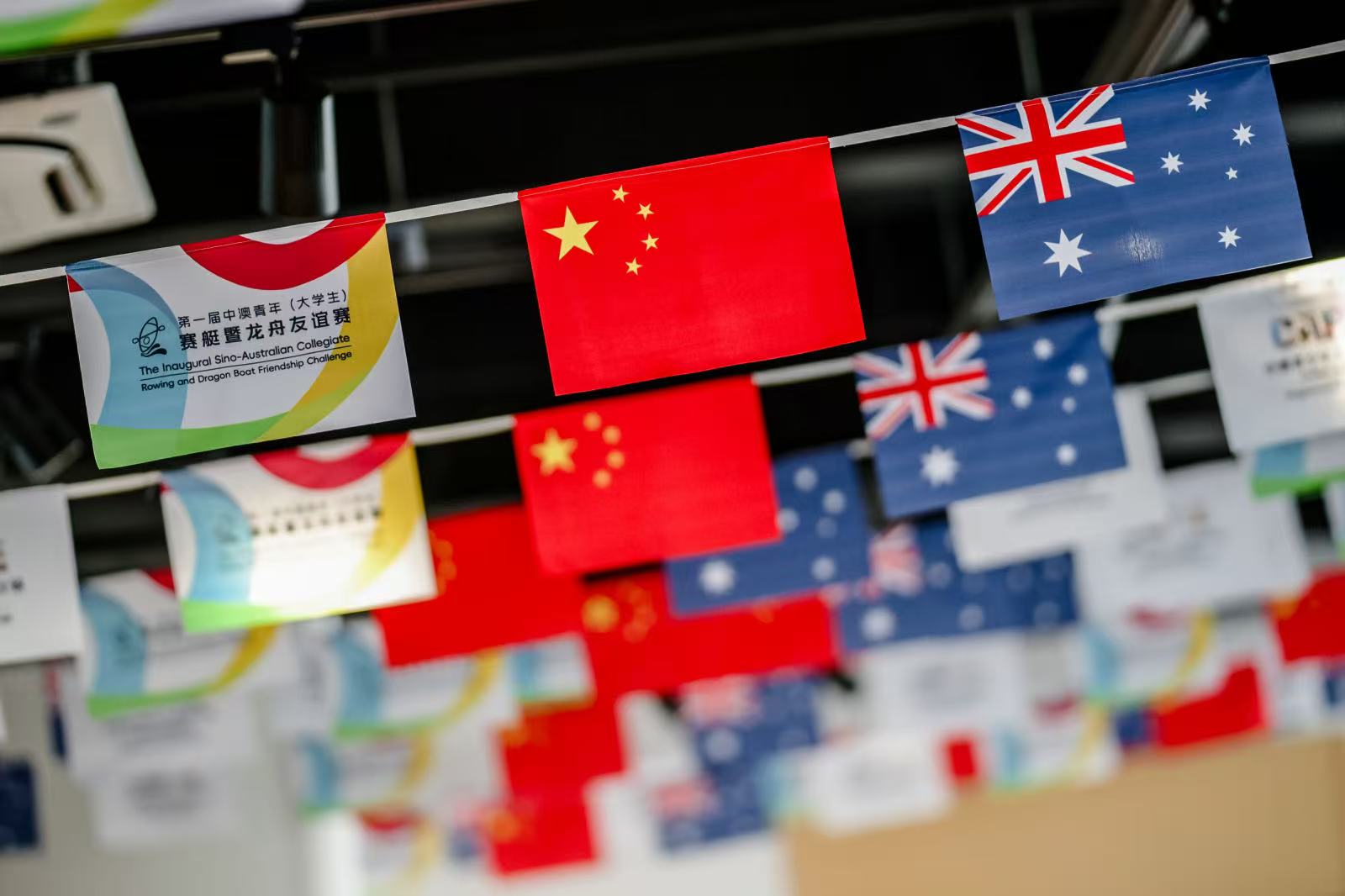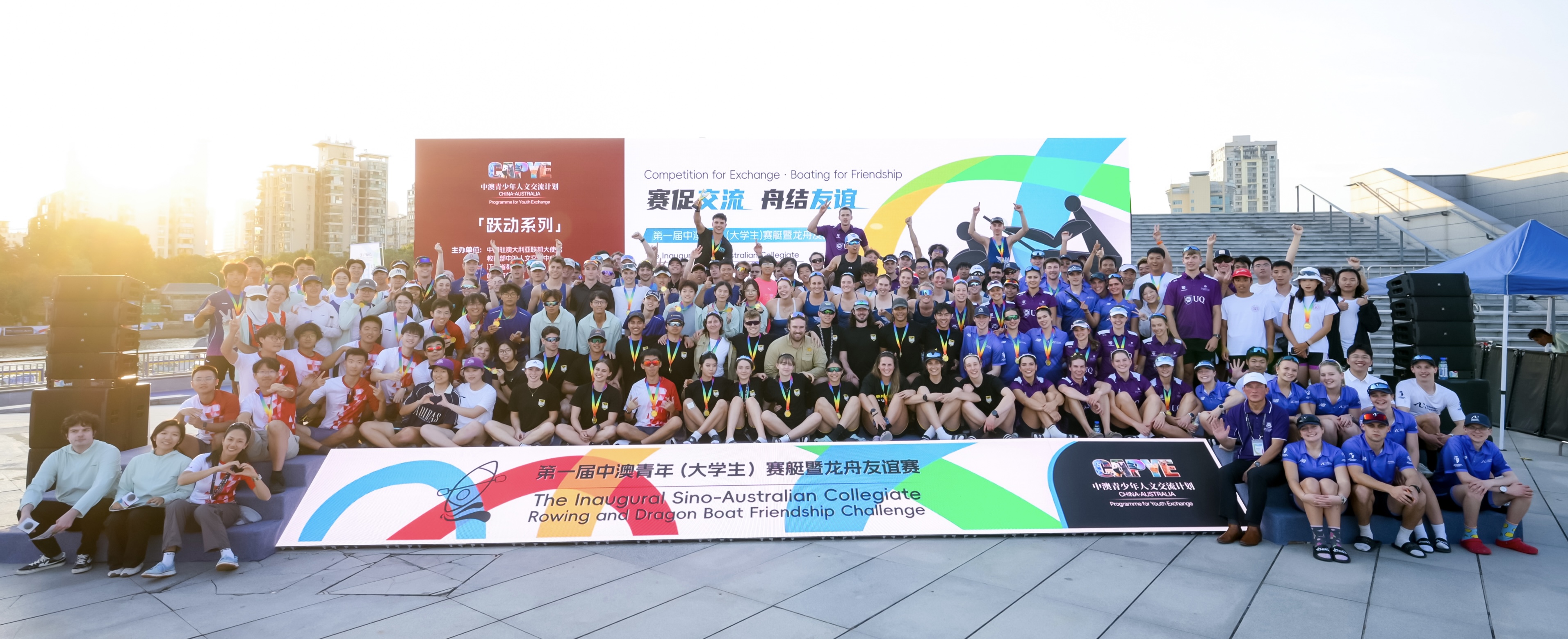
Eight days of racing, campus visits and cultural immersion came to a close on Sept. 15 as the inaugural Sino-Australian Collegiate Rowing and Dragon Boat Friendship Challenge concluded in Nanjing. From Sept. 8 to 15, more than 110 teachers and students from six leading Australian universities joined their Chinese peers to compete on the Qinhuai River, explore the ancient capital of Nanjing, and visit universities in Yangzhou, Changzhou and Zhenjiang—eight days that turned a regatta into a celebration of youth friendship between the two countries.
“One race, two boats”: mixed crews forge bonds on the Qinhuai
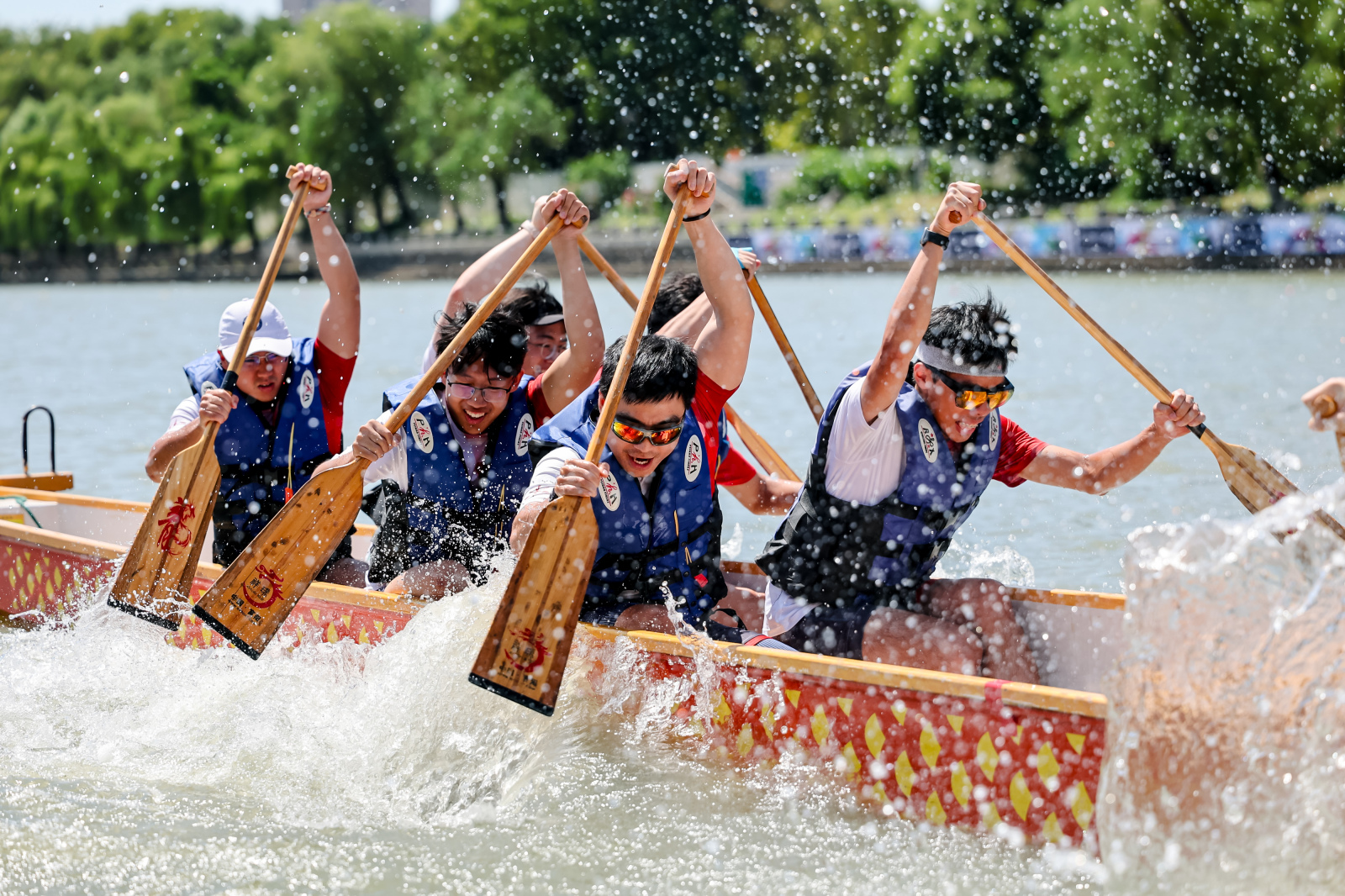
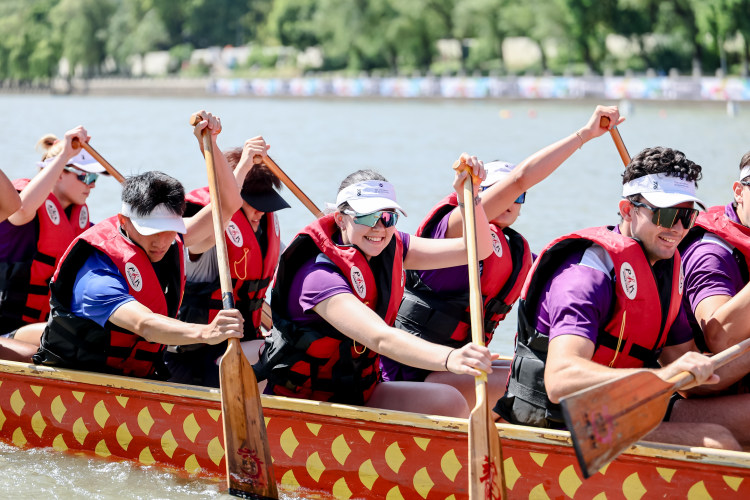
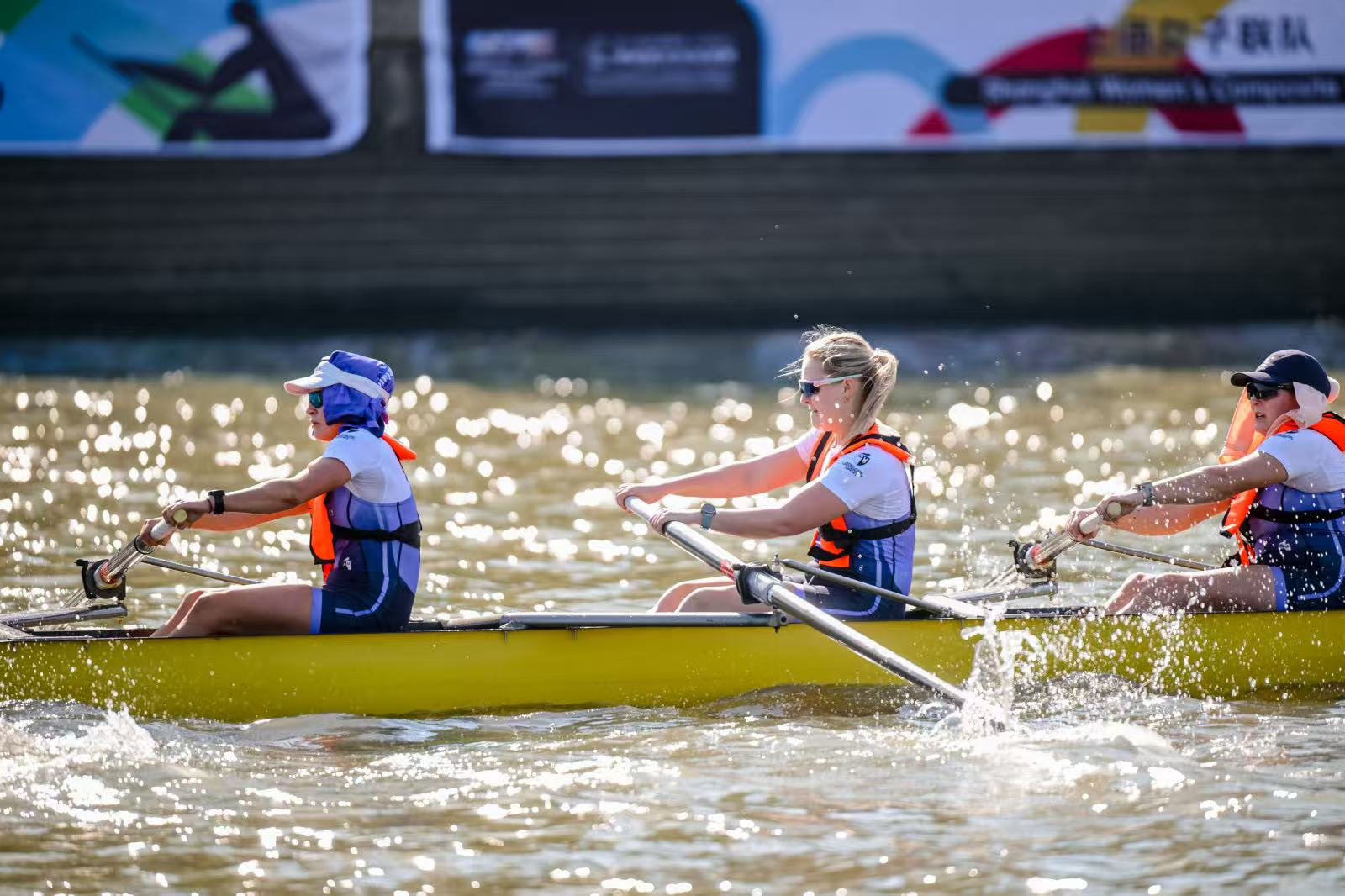
The signature mixed-crew format of the Challenge took center stage on Sept. 10. In the dragon boat competition, 11 mixed Chinese-Australian crews—teammates drawn by lot just days earlier—raced side by side over a 200-metre sprint, the drumbeat serving as the only instruction that needs no translation. Between races, a 30-second dragon boat tug-of-war pitting six against six drew waves of laughter from the riverbank. On the rowing course, 21 crews contested the 1,000-metre coxed eights, their blades cutting the water in near-perfect unison.
For many athletes, the experience went well beyond sport. “Racing dragon boats together with our new friends from Chinese universities was one of the highlights of this trip,” said one Australian paddler. “We learned how to row in a new boat as a team, communicated across language and cultural differences, shared countless laughs, and quickly built close bonds.”
The friendship even changed lives. Two members of the Adelaide University women’s rowing team had decided to leave the sport—until they travelled to China to support their teammates. After days of racing alongside their Chinese counterparts, they were so moved by their teammates’ warmth and the atmosphere of the event that they decided to continue their rowing careers. “This experience changed the course of their lives, and it made all of us believe even more strongly in the magic of sport,” said the Adelaide coach.
Australian crews shine on the international stage
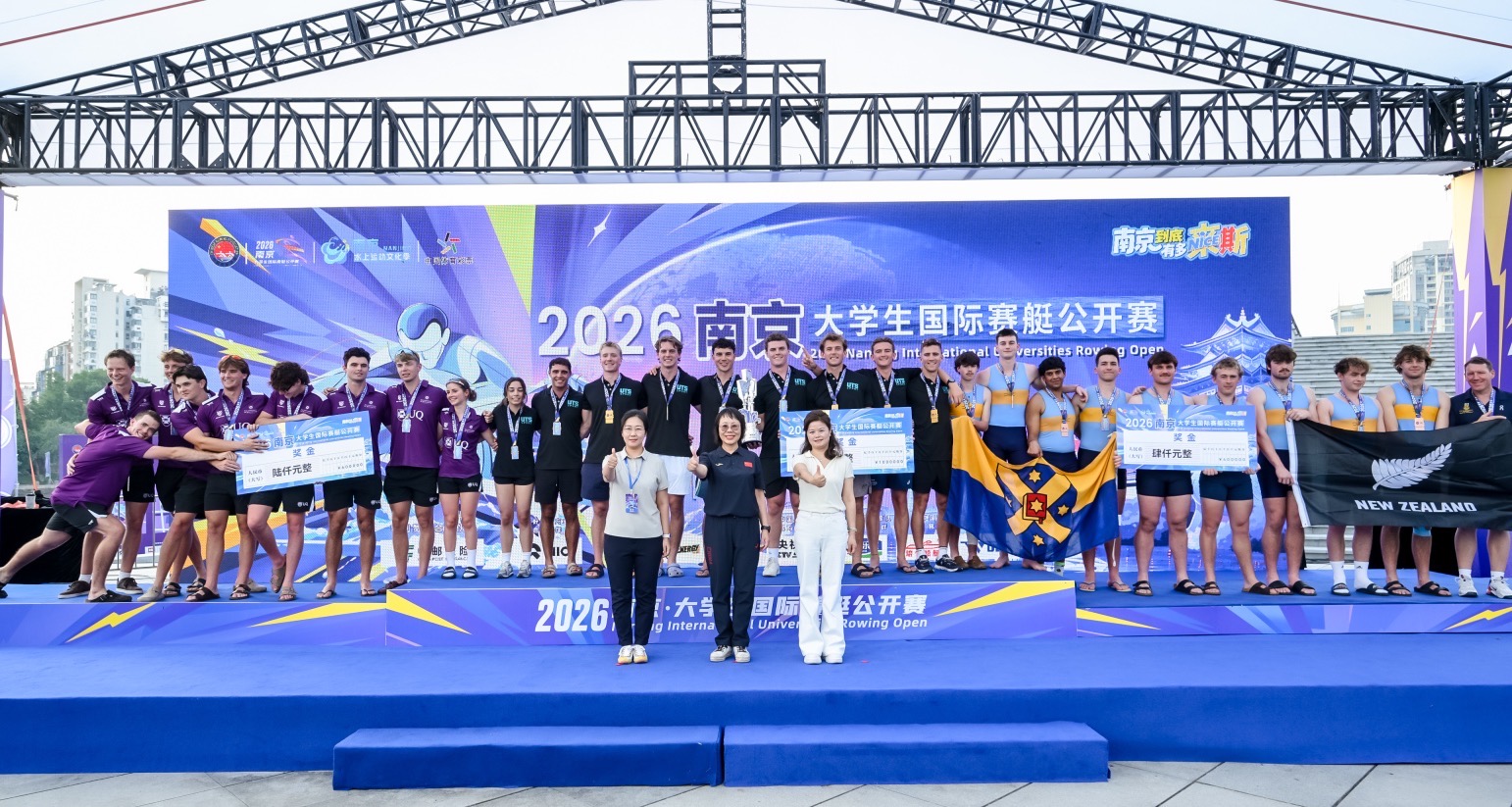
On Sept. 13, the Australian teams returned to the water for the 2026 Nanjing International University Rowing Open, facing nearly 30 top universities from the United Kingdom, Switzerland, the United States, the Netherlands and beyond. In the men’s 1,000-metre coxed eights, the University of Technology Sydney powered to gold in 5 minutes 25.67 seconds, with the University of Queensland taking silver and New Zealand’s University of Otago claiming bronze. In the women’s event, the University of Washington finished first, followed by the University of Melbourne and Adelaide University.
Australia’s strength continued on the ergometers: UTS added the men’s indoor rowing relay title in 5:31.75, while Washington won the women’s relay ahead of Queensland and Melbourne. The results underscored the depth and vigour of Australian university sport on the international stage.
Beyond the regatta: campuses, cuisine and centuries of history
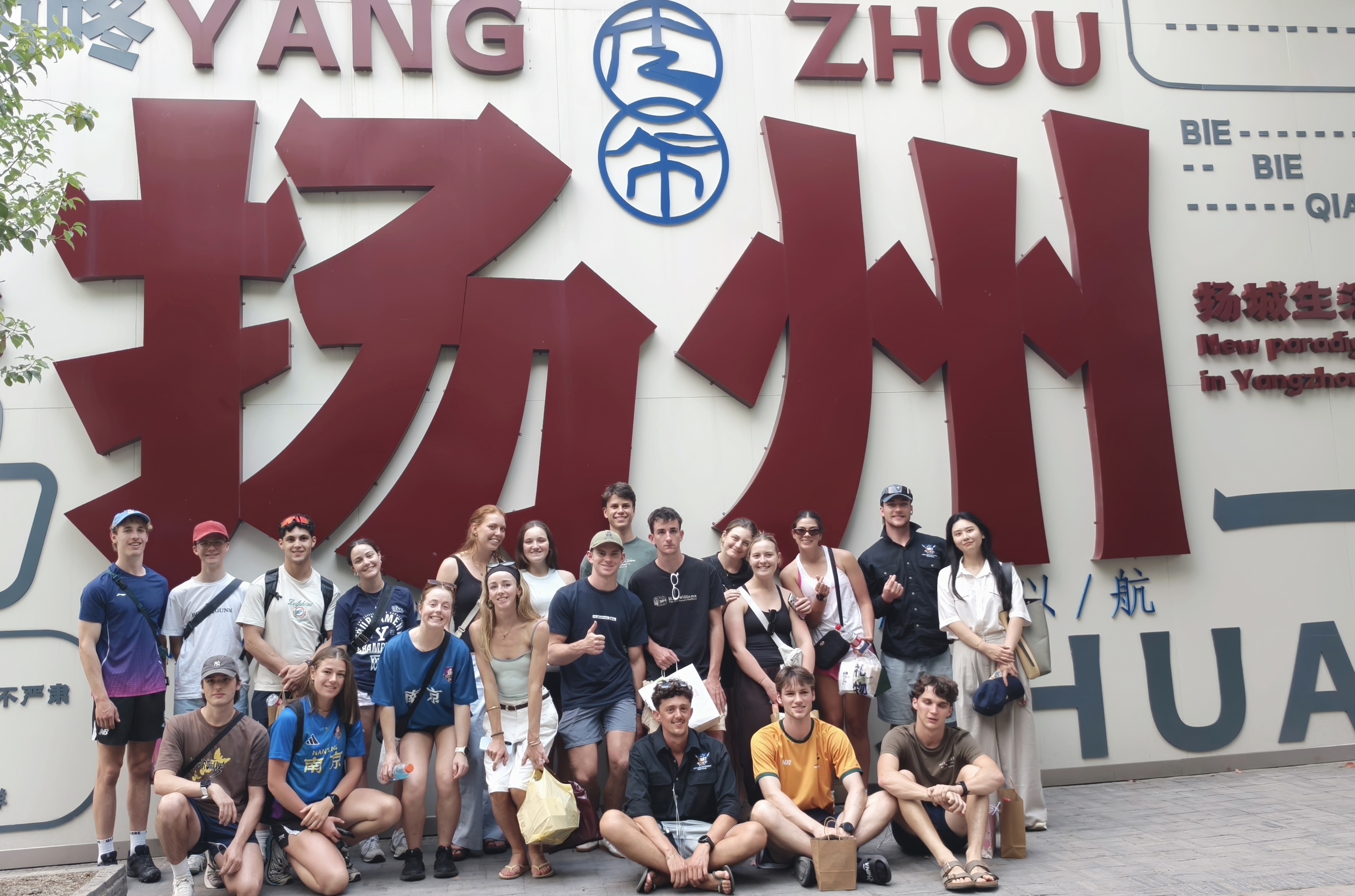
The programme reached far beyond the water. On Sept. 11, the Australian delegation visited Nanjing universities as part of the “Rowing on Campus” exchange and attended a friendship gala, where Chinese and Australian students sang, danced and talked long into the evening about their shared futures. On Sept. 14, the group split into three teams bound for Yangzhou, Changzhou and Zhenjiang. At Yangzhou University, students tried their hand at “survival Chinese” and the intangible cultural heritage craft of lacquer fans, strolled along Pishi Street and shared a traditional Qionglin banquet of Huaiyang cuisine. At Changzhou University, they toured a robotics industry institute and a new-energy enterprise, then wandered through Dongpo Park and the historic Qingguo Lane. At Jiangsu University, Chinese and international students cut paper artworks together, visited the university history museum and agricultural machinery museum, and walked the ancient Xijin Ferry street along the Yangtze.
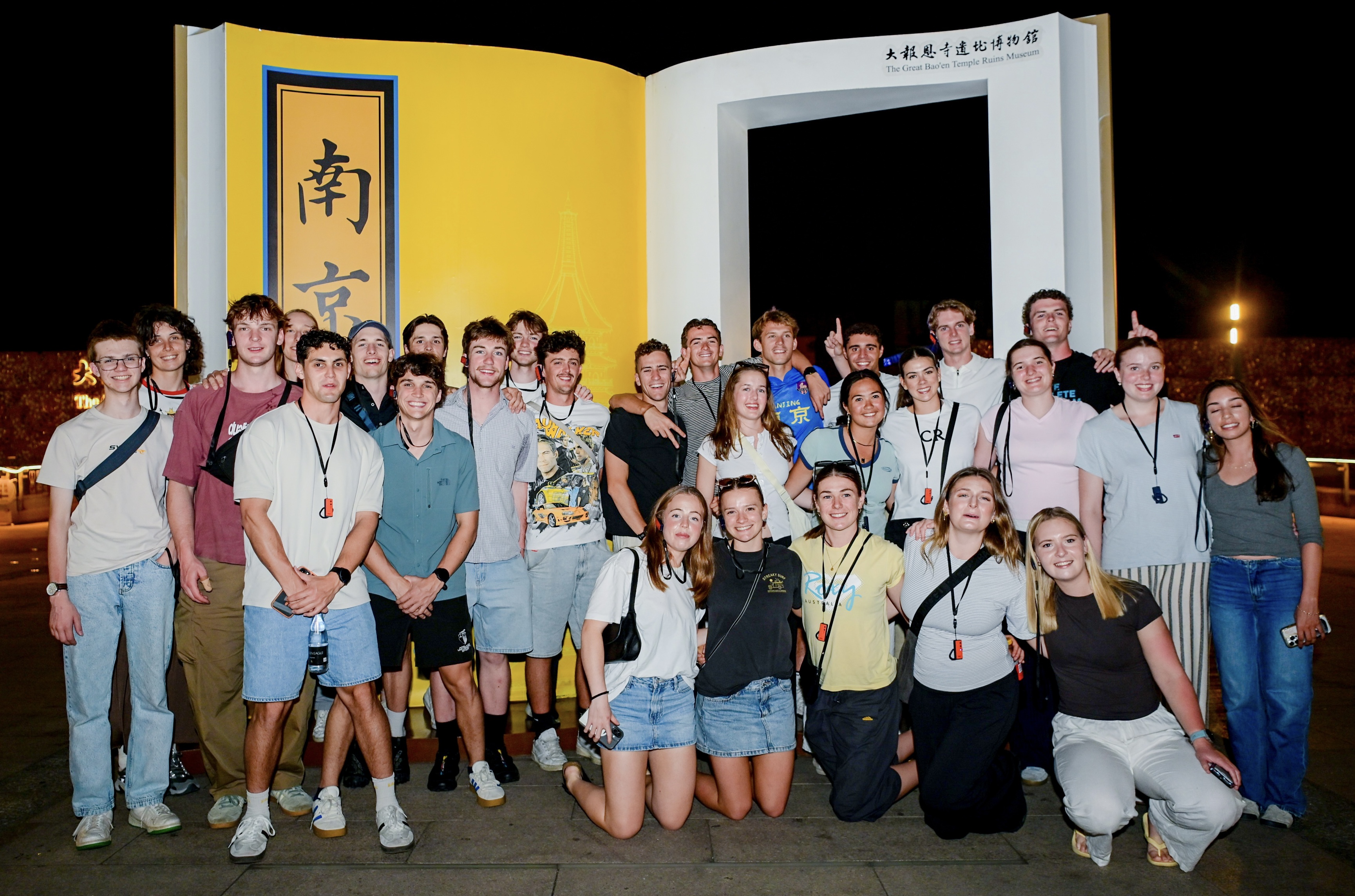
In Nanjing itself, the Australian students climbed the Ming City Wall, strolled through the Confucius Temple area, listened for history’s echoes at the Grand Bao’en Temple, and looked out over the great river from Yuejiang Tower, sampling the city’s famous cuisine along the way. “What we discovered is not only a country at the forefront of science, technology and innovation, but an ancient civilisation with thousands of years of culture and history,” one student said. For another, the journey rekindled an old spark: an UNSW student who had learned a little Chinese as a child in Singapore left China determined to keep studying the language. “The Chinese people we met along the way were so friendly—they taught us short conversations in Chinese, and it made me want to understand the language more deeply,” she said.
The first stroke of a longer journey
As the Australian delegation boarded their flights home, the student athletes reflected on what sport had made possible. “Sport has once again proven to be a powerful common language. It brings people together, builds team spirit quickly, and creates opportunities to learn from one another,” they said. “Through sport, we can share skills, language and culture while building friendships that cross borders. We hope this friendship challenge is only the beginning, and that there will be many more opportunities for Chinese and Australian students to connect through sport, education and People-to-People exchange.”

From the launch ceremony in Canberra to the races on the Qinhuai, from international competition to walks through millennia-old cities, the opening event of the “Pulse” series under the China-Australia Program for Youth Exchange (CAPYE) closed on a high note. In their differences the young athletes found harmony; in competition they found friendship—two cultures paddling in the same boat, pulling in the same direction, and adding youthful, lasting momentum to the comprehensive strategic partnership between China and Australia.